The history
Hussites, Tycho Brahe and the golden chalice at Týn Church
How a merchants' church became a Hussite stronghold, then a Catholic one, and why an astronomer is buried in it.
Reserve a seat ↗Quick answer
The Hussites controlled the church for about two centuries, according to the English Wikipedia, and a golden chalice stood on its gable until 1626. The astronomer Tycho Brahe, who died in Prague in 1601, is buried here. The church is both a religious and a scientific landmark. Reading this before the concert gives the stones around you a story.
Jan Hus and the chalice
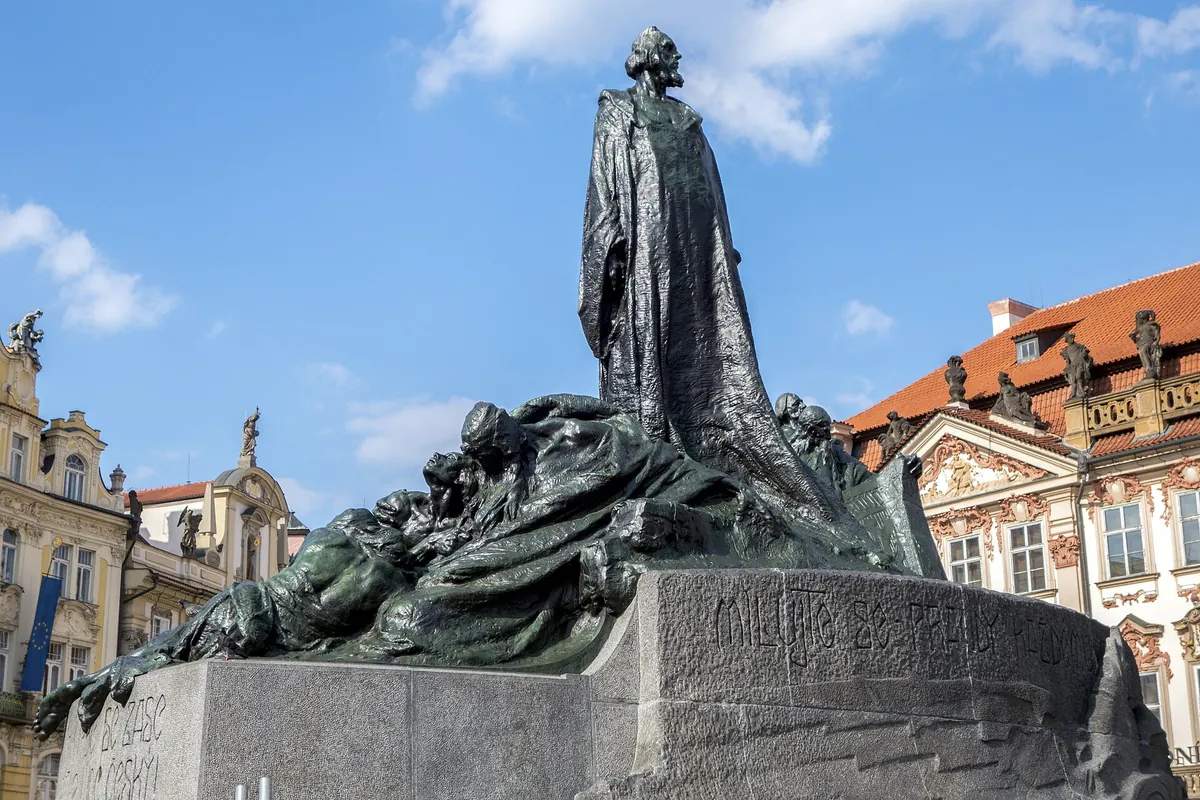
The English Wikipedia says Jan Hus was tried and executed for heresy by the Council of Constance on 6 July 1415, and that his death sparked the Hussite movement. Moderate Hussites were called Utraquists, from the Latin word for chalice, because they insisted that laypeople receive communion in both bread and wine. The memorial on Old Town Square, unveiled on 6 July 1915, marks 500 years since his death.
The church under the Hussites
The English Wikipedia says the Hussites controlled the church for about two centuries. John of Rokycan became its vicar in 1427 and later served as royal administrator of the vacant Archdiocese of Prague. The Utraquist creed stayed the established church of Bohemia until non-Catholic worship was banned after the Battle of White Mountain in 1620.
The golden chalice
A giant golden chalice, the Hussite symbol, sat atop the gable, says the English Wikipedia. After 1620 it and a sculpture of George of Poděbrady were removed in 1626 and replaced by a Virgin Mary figure whose halo was made from the melted chalice. In August 2017 the Czech Bishops Conference resolved to restore a golden chalice, and a temporary model was installed.
A famous burial
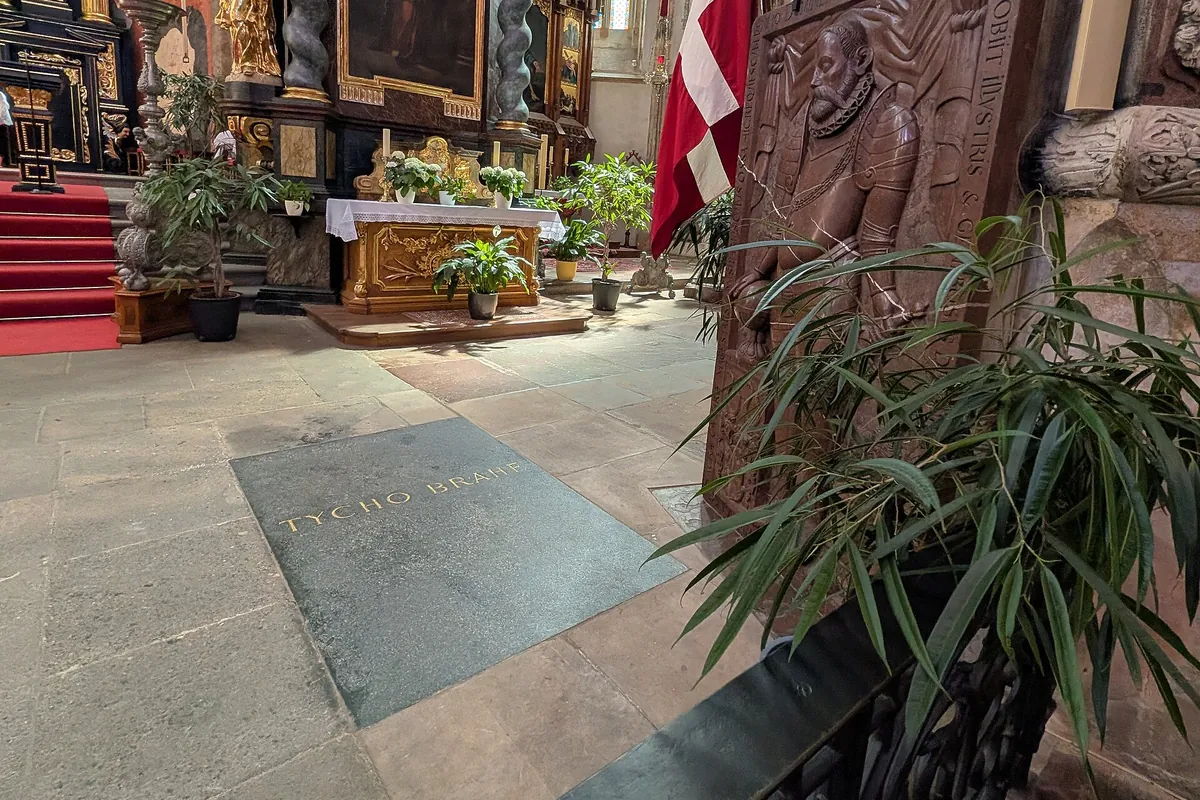
The English Wikipedia says Tycho Brahe moved to Prague in 1599 under the patronage of Emperor Rudolf II and died there on 24 October 1601. He is buried in this church, and a tombstone of 1601 stands at the first southern pillar. A study reported in 2012 found too little mercury to support murder, concluding it was impossible that he had been murdered.
What it means for your evening
None of this is part of the concert, but all of it surrounds you. The booking page lists music, an entry ticket and a printed programme, not a historical tour. Read this page beforehand and look for the pillar and the gable detail when you arrive.
Who this isn't for
If you would rather hear the music with no background, you can skip this page. It is not a theological account or a full history of the Hussite wars, and it prints no dates beyond those the English Wikipedia states.
Read next: Týn Church concert in Prague: worth it, and how to get in
The Compactata
The English Wikipedia says the Compactata, also called the Compacts of Basel, were accepted and signed at Jihlava on 5 July 1436. They were based mainly on the Four Articles of Prague and allowed communion in both kinds. That settlement is part of why Utraquism, the chalice creed, lasted in Bohemia as long as it did.
Crosses in the pavement
On Old Town Square, twenty-seven crosses in the pavement in front of the Old Town Hall honour men beheaded after the Battle of White Mountain, says the English Wikipedia. They are a few steps from the church and a reminder that the square's history is not only musical. Walk past them on your way in.
Frequently asked questions
Who was Jan Hus?
A preacher executed for heresy on 6 July 1415, whose death sparked the Hussite movement, per the English Wikipedia.
What was the golden chalice?
The Hussite emblem on the church's gable, removed in 1626.
Who is buried in the church?
Tycho Brahe, who died on 24 October 1601.
What does Utraquist mean?
It comes from the Latin word for chalice, because moderate Hussites wanted lay communion in bread and wine, says the English Wikipedia.
Is the chalice back on the gable?
A temporary model was installed after the 2017 resolution to restore it, per the English Wikipedia; check the church for its present state.
Sources